
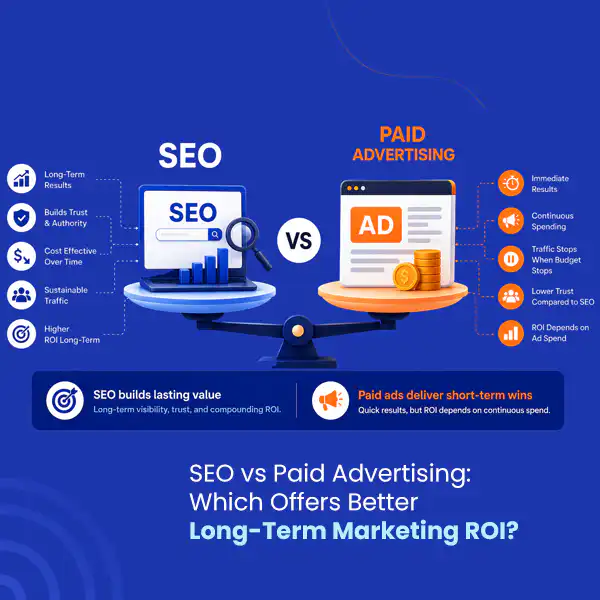
As the digital landscape is on a fast track due to that businesses often face one major marketing decision that is to invest in SEO or Paid Advertising?
Both strategies can generate leads, increase visibility, and drive conversions, but the answer depends on the business’s aims, timeline, and budget.
- 💡 If comparing SEO vs PPC, then understanding how each channel contributes to sustainable growth is essential.
Understanding SEO and Paid Advertising
What is Search engine optimising?
Search Engine Optimisation (SEO) is the process of improving a website’s visibility in the organic search engine results.
- Keyword Research
- Technical SEO
- On-Page Optimization
- Content Marketing
- Link Building
- User Experience Improvements
If SEO is performed accurately, then it can permit businesses to rank for specific desired keywords that have a high intent level, and is able to consistently generate qualified traffic without having to pay for every click.
What is Paid Advertising?
Paid advertising generally referred as PPC (Pay-Per-Click), where need to pay platforms like Google or social media networks to show your ads to the right people.
Popular paid channels include:
- Google Ads
- Meta Ads
- LinkedIn Ads
- YouTube Ads
Paid campaigns can generate immediate traffic, making them highly effective for launching product, promotions, or short-term lead generation.
SEO: The Long-Term Growth Engine
SEO is often compared to building an asset. The first investment in creating content, technical optimization, and most important authority building may take time, but the advantages get compound over time.
Benefits of SEO:
1. Sustainable Organic Traffic
Once your pages start ranking, they can generate traffic for months or even for years.
2. Lower Cost per Acquisition
Unlike paid campaigns, you don’t pay for every visitor.
3. Higher Reliability and Credibility
Users often trust organic search results more than sponsored advertisements.
4. Better Compounding Returns
Quality content and backlinks are consistent in delivering value long after publication.
Paid Advertising: Fast Results, Immediate Visibility
PPC marketing delivers quick wins. The moment campaign goes live, brand can appear on top of search results.
Benefits of Paid Advertising:
1. Instant Traffic
Suitable for new businesses or time-sensitive campaigns.
2. Precise Targeting
It targets audiences by location, age, behaviour, interests, and keywords.
3. Fast Testing
Paid advertisements always permits quick testing of landing pages, offers, and messaging.
4. Scalable Lead Generation
As long as the budget continues, traffic continues.
Comparing Long-Term ROI
| Factor | SEO | Paid Advertising |
|---|---|---|
| Initial Results | Slow | Immediate |
| Cost Over Time | Decreases | Continues |
| Traffic Sustainability | High | Stops when budget stops |
| Trust Factor | Higher | Moderate |
| Long-Term ROI | Excellent | Variable |
- From a long-term business perspective, SEO generally offers better digital marketing ROI because it creates lasting visibility and reduces dependency on ad spend. However, paid advertising works exceptionally well when immediate lead generation is required.
The Smart Strategy: Combine Both
The most successful businesses don’t choose one over the other—they combine both.
- Use PPC for:
- Immediate traffic
- Product launches
- Seasonal campaigns
- Use SEO for:
- Brand authority
- Consistent lead generation
- Long-term customer acquisition
Frequently Asked Questions
SEO is better for long-term growth, while paid advertising is better for immediate visibility and instant leads.
Most of the SEO campaigns start showing measurable results within 3–6 months, again depending on competition and authority of website.
Yes, in the long run because PPC requires continuous budget allocation, whereas on the other hand SEO creates compounding returns.
Yes. Small businesses often use PPC for quick leads while building SEO authority over time.
Absolutely. Search intent, content relevance, and authority continue to drive organic rankings and business growth.
Conclusion
When comparison comes between SEO vs Paid Advertising, the better and long-term investment is usually SEO as it builds sustainable visibility, credibility, and lower acquisition costs over time. Paid advertising still remains valuable for immediate results, but SEO generates a lasting digital asset that continues delivering leads even after the initial investment.
Businesses looking for strategic growth often work with experienced digital marketing partners like #1 Vinayak InfoSoft – a digital marketing and SEO company based in Ahmedabad, helping brands to build both short-term performance and long-term online success.