
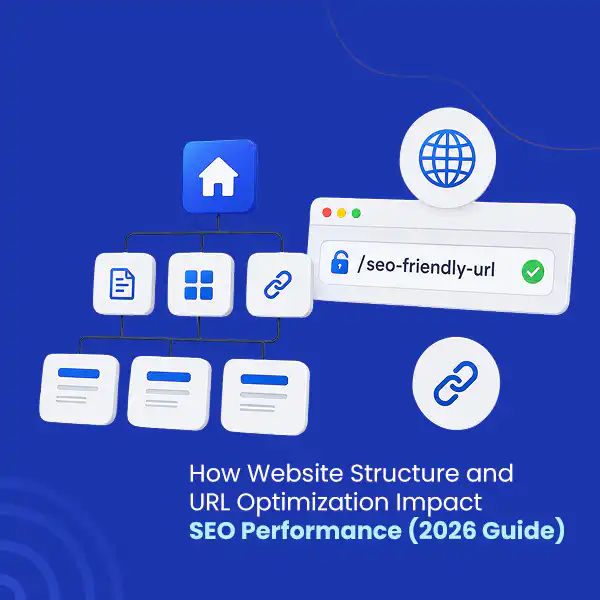
1. Website Structure in SEO means?
Website structure refers to how webpages are organized, linked, and grouped within a website.
Key Elements:
- Hierarchical page organization (Home - Category - Subcategory - Page)
- Internal linking structure
- Navigation menus
Content silos (topic-based grouping)
why it matters in 2026:
Search engines are now prominently using AI-driven crawling systems that prioritize contextual relationships between pages. A strong structure improves topical authority and semantic relevance.
2. Impact of Website Structure on SEO Performance
2.1 Improved Crawlability
Search engine bots can easily discover and index pages when structure is logical.
- Reduces orphan pages
- Ensures faster indexing
- Improves crawl budget efficiency
2.2 Strong Topical Authority
Grouping related content into silos strengthens expertise signals.
Example:
- Solar Energy - Panels - Installation - Subsidy Guide
- This helps Google understand your domain expertise in a niche.
2.3 Better User Experience (UX Signals)
A clear structure improves:
- Navigation ease
- Time on site
- Lower bounce rate
These behavioural metrics indirectly influence rankings in 2026.
2.4 Enhanced Internal Linking Power
Strategic internal links distribute authority (link equity) across pages, improving rankings for deeper pages.
3. What is URL Optimization in SEO?
URL optimization refers to creating clean, descriptive, and structured URLs that help both users and search engines understand page content.
4. Best Practices for SEO-Friendly URLs (2026 Standards)
4.1 Keep URLs Short and Descriptive
✔ Good: /solar-rooftop-installation-ahmedabad
✖ Bad: /page?id=12345&ref=abc
4.2 Use Primary Keywords Naturally
URLs should include relevant keywords without stuffing.
Example:
Roofing-sheet-manufacturer-Gujarat
Logo-design-brand-perception
4.3 Use Hyphens, Not Underscores
Google reads hyphens as word separators:
✔ solar-panel-installation
✖ solar_panel_installation
4.4 Maintain Logical Hierarchy
Example: https://vinayakinfosoft.com/search-engine-optimization.htm – this helps search engines understand content relationships.
4.5 Avoid Dynamic Parameters
Static URLs perform better in crawling and indexing.
5. Relationship between Website Structure and URL Optimization:
Both work together to build semantic clarity:
Structure = How content is organized
URLs = How content is identified
When aligned, they improve:
- Indexing speed
- Keyword relevance
- Site authority signals
6. EEAT Guidelines Applied in SEO Structure (2026)
Experience
• Real-world examples improve credibility
• Case-based content performs better in rankings
Expertise
• Industry-specific keyword usage strengthens authority
• Technical SEO accuracy is essential
Authoritativeness
• Internal linking to pillar pages builds topic authority
• Consistent structured content improves trust signals
Trustworthiness
• Clean URLs increase user trust
• Transparent navigation reduces bounce rate
• HTTPS + structured architecture signals reliability
7. Common SEO Mistakes to Avoid
- Random URL structures across pages
- No internal linking strategy
- Overly deep page hierarchy (more than 3–4 levels)
- Keyword-stuffed URLs
- Duplicate URL paths for same content
Frequently Asked Questions
Website structure helps comprehend the interrelations between web pages, makes sites more crawlable, provides better experience for the user, and allows building topical authority which has positive effects on SEO optimization.
SEO-friendly URLs allow improving the comprehension of topics of the web pages both by users and by search engines, facilitate indexing process, help establish a higher degree of trust, and may increase the click-through rates.
Usually, optimized websites have rather simple structures. For example, the most preferable website hierarchy is like this: Home > Category > Subcategory > Product/Service Page.
If keywords suit naturally within the URL, they should be included as the content relevance and topic comprehension by search engines become better this way.
Internal linking allows distributing link equity, establishing the topical authority of the website, making navigation easier for users, and improving indexing process.
Conclusion
The two key SEO ranking factors that have been given priority in 2026 SEO include the website structure and URL optimization. Both are vital components of website architecture in addition to helping in the development of effective technical SEO. In case a business is able to align its websites in line with the EEAT factors, it is likely to get an edge over its competitors. In case you want to improve your website architecture and technical SEO, consider working with experts like #1 Vinayak InfoSoft.