
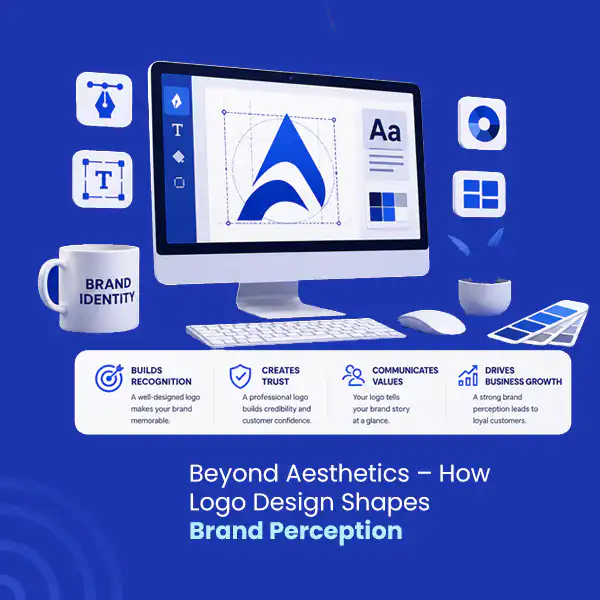
You have about 50 milliseconds before someone’s already made a call on your brand. Not your product. Not your price. Your logo.
Most business owners treat it like a formality tick it off the list, move on. That thinking costs more than most realise.
A logo is not decoration. It’s communication. Get it wrong and you’re losing people before they’ve read a single word about you.
The Psychology behind Logo Design
Every element of your logo is saying something even when you didn’t plan it that way.
Colour goes first. Blue signals trust and stability; banks and tech firms figured this out long ago. Red creates urgency, which explains why food brands default to it. Green reads as natural or financially safe. In good professional logo design, none of this is guesswork. It’s deliberate signalling.
Shape works the same way. Circles feel warm and communal. Sharp angles read as precise and strong. Rounded edges come across as approachable. These associations are already baked into your audience before they consciously think about you.
Typography seals the impression. Serif fonts carry authority. Sans-serif feels clean and current. Script reads personal. People absorb typeface personality before they process what the words actually say.
Combine these with intention and the logo earns its place. Combine them carelessly and it works against you.
Logo vs. Brand Identity: Not the Same Thing
A weak logo doesn’t just look bad. It signals something carelessness, inexperience, cut corners whether any of that is true or not.
Logo design for small businesses carries stakes that are easy to underestimate. A large company can absorb a mediocre logo because product familiarity and ad budgets pick up the slack. A smaller business doesn’t have that cushion. The logo is doing trust-building work that years of reputation haven’t had a chance to do yet.
What Holds Up and What Doesn't
- Simplicity. The most recognised marks in the world are stripped back. Complicated logos fall apart at small sizes and stick in nobody's memory.
- Versatility. Your logo will land on a website, a business card, a social thumbnail, signage, and packaging. It needs to work in colour and black and white, large and tiny. Test it before you commit.
- Distinctiveness. A logo that looks like your competitor's is worse than having no logo at all. Impactful logo design gives customers a mark they can pick out without being prompted.
- Relevance. Chasing design trends without thinking about your actual audience produces logos that look great in a portfolio and confuse everyone else.
Consistency Is Where It Compounds
A strong logo used inconsistently does about half the job. Recognition builds through repetition same mark, same colours, same feel, every time. Change it up constantly and you reset the process every time.
Businesses serious about growth invest in a complete brand identity design system. Not just a logo file and good intentions.
Frequently Asked Questions
Conclusion
Your logo is the front door. It won’t close the sale on its own but it decides whether people walk in or keep moving.
If yours no longer reflects where your business is heading, that gap has a cost. #1 Vinayak InfoSoft has spent 27+ years helping businesses across Ahmedabad and India get this right from logo design to complete digital branding. Talk to the team before your competitors do.