
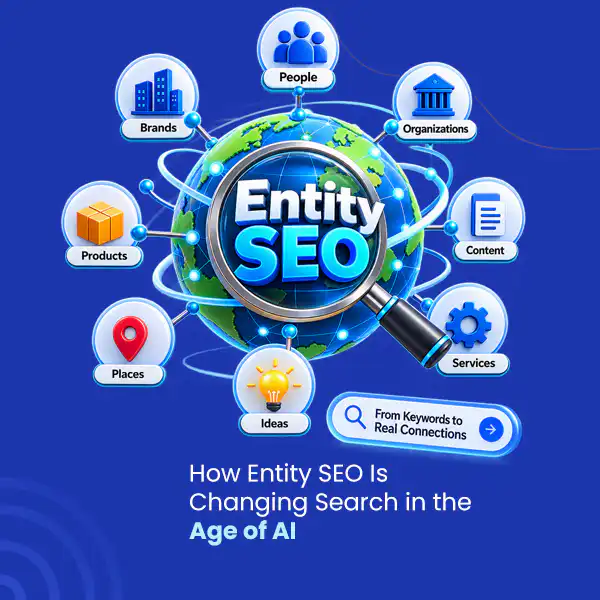
A search is not merely a matter of matching keywords with webpages anymore. As AI-driven search becomes increasingly advanced, search engines and AI become increasingly capable of recognizing people, brands, products, places, and ideas and their connections.
This shift has made Entity SEO an increasingly important part of modern search strategy. Instead of focusing only on ranking for individual keywords, businesses now need to build a clear and consistent digital identity that search engines and AI platforms can understand.
What Is Entity SEO?
Entity SEO refers to the process of optimizing the branding, person, product, service, or organization into a unique entity that search engines can recognize and comprehend.
For instance, in a situation where Google or any other AI-based platform recognises a certain company, there is much more for the engine to learn about the company beyond its name. The company might be required to be identified by what it does, the services that it offers, and its location, among others.
This is how entity-based SEO differs from conventional keyword-based SEO. Keywords tell search engines what the page is all about. However, entities tell the search engine about the person or the thing the page talks about and its relevance to other things as well.
Why Entity SEO Matters in AI Search
AI-based search processes have brought transformation to the ways that people access information. Google AI Overviews, ChatGPT, Gemini, and Perplexity search engines can comprehend conversational questions and provide answers, recommendations, and comparisons.
A user may no longer search for “SEO Company Ahmedabad.” Instead, they might ask:
“Which SEO companies in Ahmedabad are experienced in AI search optimisation?”
For an AI system to recommend a business, it needs to understand the business as an entity not simply identify a keyword on its website.
This makes AI search visibility increasingly dependent on brand clarity, topical relevance, authority, and consistent information across the web.
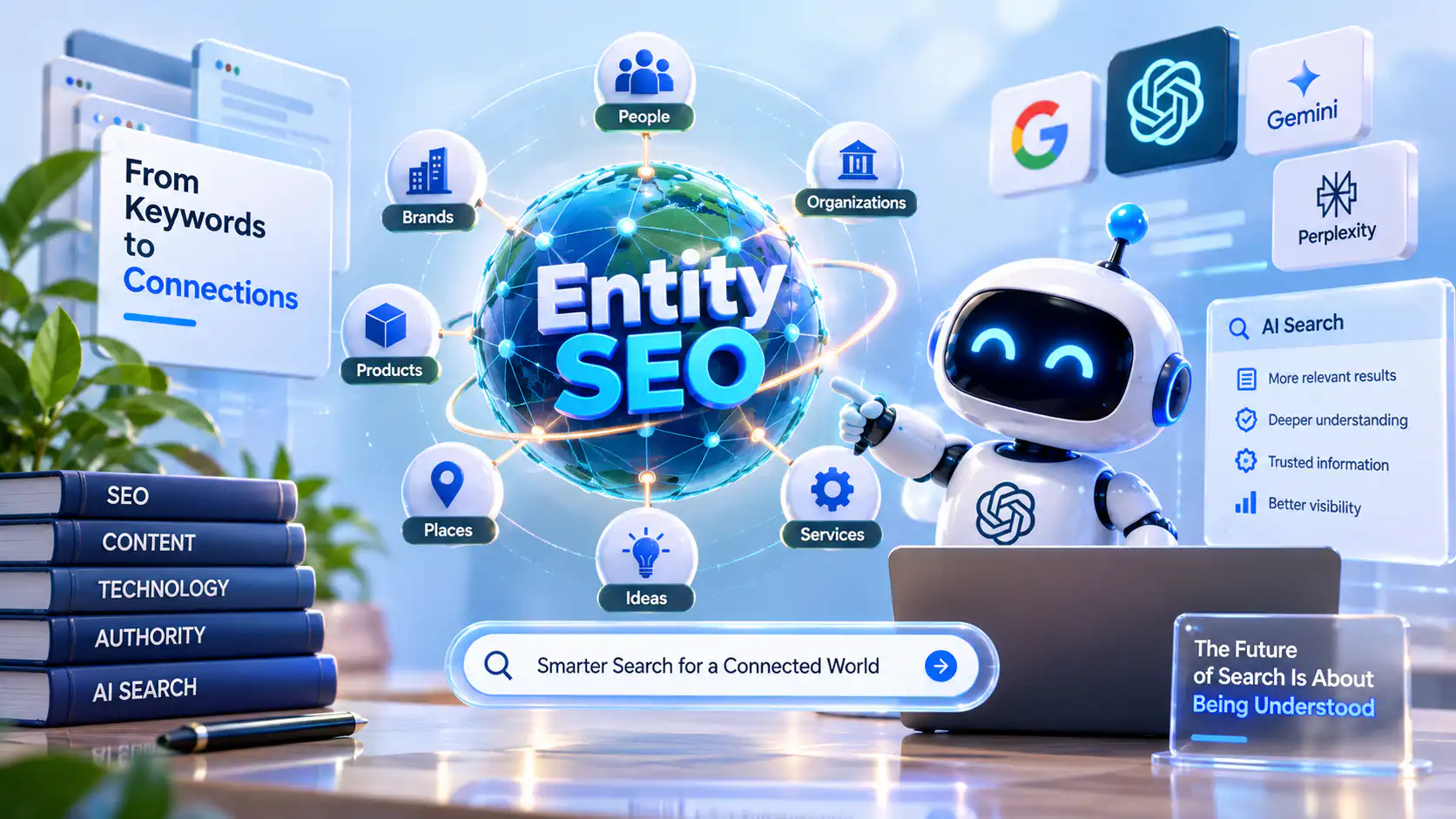
From Keywords to Connections
Traditional SEO often focuses on individual keywords and rankings. Semantic SEO takes this a step further by helping search engines understand relationships between topics and concepts.
For example, an SEO agency may be connected with entities such as:
- Search Engine Optimization
- Technical SEO
- Content Marketing
- LLM SEO
- Digital Marketing
- Ahmedabad
When these relationships are clearly established across a website and other credible sources, search engines can develop a stronger understanding of the brand.
This is also where knowledge graph SEO becomes relevant. Search engines can use structured information and relationships between entities to build a deeper understanding of the web.
How Businesses Can Strengthen Their Entity SEO
A strong Entity SEO strategy starts with consistency.
The organization should make sure its name, services, geographical area, contact information, and other necessary data are consistent across its website, business profile pages, directories, and other relevant third party websites.
Content also plays an important role. Rather than creating multiple pages just for the purpose of optimizing for different keywords, the organization should create valuable content in order to display its knowledge about certain topics.
Structured data can further help search engines interpret important information about a business, organisation, product, service, or other entity.
Most importantly, businesses need to build authority beyond their own website. Credible mentions, industry publications, reviews, relevant backlinks, and third-party references can strengthen the overall entity footprint.
Entity SEO and the Future of LLM SEO
LLM SEO and Entity SEO are becoming closely connected.
Large language models need reliable signals to understand brands and determine which information is relevant to a user’s question. A clearly defined entity with consistent information, strong topical authority, and credible online references has a stronger foundation for AI-driven discovery.
But this does not mean that traditional SEO is losing its relevance. Technical SEO, good content, backlinks, UX optimization, and keyword research are all important. Yet the scope is changing from ranking pages to understanding brands within search ecosystems.
Frequently Asked Questions
Entity SEO is the practice of helping search engines understand a brand, person, product, or concept and its relationship with other relevant entities.
It provides clearer context about a business and its expertise, helping AI-powered search systems better understand and associate relevant information with the brand.
No. Entity SEO complements traditional SEO by adding greater context, meaning, and relationships to existing keyword and content strategies.
Yes. It helps AI systems better understand your brand, expertise, and relevance.
Entity SEO is a long-term strategy. Results depend on your website authority, content, competition, and consistency.
The Future of Search Is About Being Understood
The biggest change brought by AI is simple: search engines are moving from matching words to understanding meaning.
For businesses, this means SEO in the age of AI is no longer only about asking, “Which keywords should we rank for?”
The better question is: “Does search understand who we are, what we offer, and why we are relevant?”
That is the real opportunity behind Entity SEO. Brands that build a clear, authoritative, and consistent digital identity today can improve their chances of being discovered across traditional search and AI-powered platforms.
Want to strengthen your brand’s visibility across Google and AI search platforms?
Contact #1 Vinayak InfoSoft to explore our SEO and LLM SEO solutions designed for the evolving search landscape.