
Search is becoming more than just blue links. Platforms such as Google AI Overviews, AI Mode, ChatGPT, Perplexity, and others that provide answers are altering how people search for information. Understanding the context of a page, its content and its connections is essential in this environment: the search engine or AI system must interpret what it is all about, who it is for, and how its information relates to the rest. This is where structured data for AI search becomes more and more beneficial.
What is Structured Data in SEO?
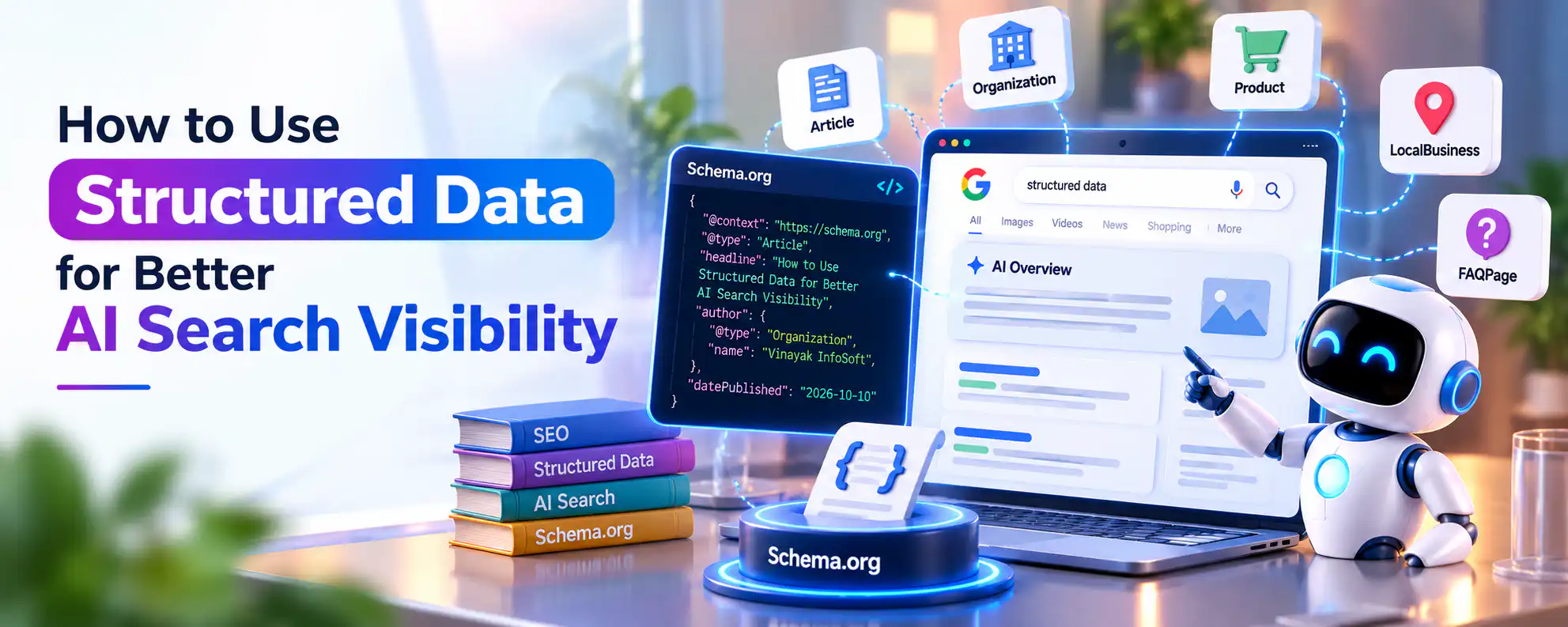
Structured data is one of the standardized ways of supplying information about webpages to search engines. This type of data includes the use of vocabularies like Schema.org to describe entities, content, products, organizations, events and other page content.
For example, an article can be used to mark up the title, author, date published and other relevant information. An organization can be used for providing more information about the organization that is behind the website, using the Organization or Local Business schema.
Though schema mark-up can’t assure top positions or AI citations, it can provide search engines with a more consistent understanding of content.
Why Structured Data Matters for AI Search
Context and relationships between information are crucial for AI powered search. While a page may have the right information, machines must be able to tell what each piece of information means.
Structured data for SEO can give a more context around:
The entity that maintains a website. A company or group of people who run a website.
- Products and services
- Articles and authors
- Frequently asked questions
- Place and information about the company
- Relationships between different entities
Therefore, semantic SEO is crucial to optimizing websites for today’s search experience.
Structured data is a valuable tool for achieving site visibility, but how can you put it into practice?
Use the right schema type:
- The first thing to do is to know what the page is about. In cases where there is need to do this, make sure you add schema of the appropriate type such as Article, Organization, Product, Service, FAQPage, or LocalBusiness.
- There is no need to add schema simply because it is possible.
- Ensure Structured Data is Consistent with Page Content
What you have in your schema should be reflective of what users can find on the webpage. Lack of structured data information can detract from its usefulness, and may lead to inaccuracies when the data is used for validation. When you are creating a good entity footprint, consistency of the content, structured data and other business data becomes crucial.
Connect Important Entities
Modern search is more geared towards entities now than it is towards individual keywords. To clearly identify your organization, authors, products, services, and more, using structured data.
If applicable, properties like sameAs can be used to make an organization relate to its valid external profiles and references.
Verify and track your markup.
When it is done, the data needs to be validated and continuously monitored. Mistakes could have been made when updating websites or changing content.
However, while structured data might be implemented only once, it is a continuous technical SEO process.
Structured data is just one component of AI SEO.
AI-generated answers do not automatically show if a website doesn’t have schema markup. Despite the stark increase in visibility, good content, technical accessibility, entity clarity, authority, internal linking and a website that can be understood and trusted by information AI systems are still key factors for strong visibility.
Structured data is meant to enhance the machine-readable component of your site for AI visibility. It can complement a solid entity strategy and quality content to help ensure your brand’s information and understanding is conveyed in today’s search landscape.
Frequently Asked Questions
Structured data does not guarantee higher rankings or AI citations. It helps search engines better understand and interpret webpage information.
There is no single best schema. The appropriate type depends on the content and purpose of the webpage.
Yes, it can support clearer machine understanding of entities and content, but it should be combined with strong content and technical SEO.
Conclusion
AI search is changing the world of information gathering, and it is imperative that web sites are simple to understand not only by users but also by search engines. It is possible to lay down a solid foundation for search visibility through AI-powered search by incorporating the use of correct structured data and entity SEO.
Need help with optimizing your site for today’s search? Contact Vinayak InfoSoft to get an effective AI-powered SEO plan for your business.