
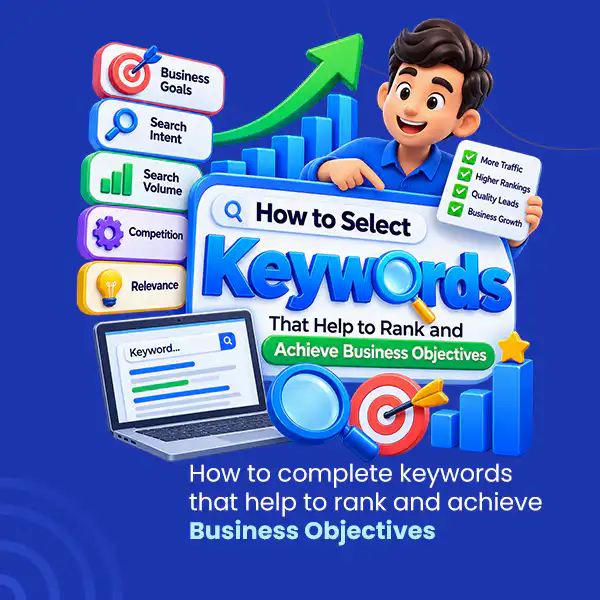
One of the most crucial measures of any SEO campaign is the right selection of keywords. But it’s not enough to choose keywords that are trending in the top positions, if they don’t lead to higher rankings and business development. What’s required is a smart selection of keywords that align search intent, competition, relevance, and real business goals.
A solid keyword strategy can help your site rank for the right keywords, boost organic traffic and produce valuable leads or sales.
Outline Your Company Goals
Before starting keyword research, know your desired purpose for SEO. Do you want to get leads, build product enquiries, and help promote a service or build brand visibility?
For instance, a B2B manufacturer might get more clicks from a specific keyword like industrial valve supplier than from a generic keyword like valves. Likewise, if a service business places importance on location-based searches that are more likely to yield inquiries, then it may do so.
Your keywords should help you to guide the user from the search to the action of the business.
Understand Search Intent
Search intent is a user’s actual goal when adding a query to Google. It plays an important role in choosing the keywords for SEO.
Common types include:
- Information – seeking knowledge or answers
- Commercial – making comparisons of products, services, or solutions.
- Transactional – willing to buy or ask about
- Navigational – Where people search for a particular firm or site.
A keyword could be very popular and have thousands a month of searches, but if the intent of the search is not aligned with what you have to offer, it may be traffic with no return.
Maintain Search Volume & Competition Balance.
Some high volume keywords may seem appealing, but they are also very competitive. Rather than focusing on high-traffic keywords, try targeting high-volume and attainable ones.
These can be especially valuable as they are more specific and typically convey a better user intention. Primary keywords, supporting keywords, location keywords, and long-tail keywords are all part of a balanced list of keywords.
The goal is not to achieve as many keywords as possible. It’s to be ranked for the right keywords.
Check Keyword Relevance
Each keyword must relate to the page it will be targeted to. Don’t include keywords just because they have high search volumes.
Ask three simple questions:
- Does this keyword describe our product or service?
- Would our target audience realistically search for it?
- Can the corresponding page provide a useful answer?

If the response is yes, then the keyword has greater potential.
Analyse the SERP before Finalising
Don’t settle for a keyword only from a keyword research tool. Go to Google and learn about the SERP (Search Engine Results Page).
Review the kind of pages appearing in the ranking, the content type, search intent, competition, and if the search results are aligned with your business offering.
This step is useful to determine if your site is going to be competitive and what kind of information people are looking for.
Relate Keywords to business value.
The last thing you need to do is to focus your keywords according to their potential for SEO and business value.
Some of the following factors should be considered in a helpful keyword evaluation:
The relevance of the information to the business.
- Search intent
- Search volume
- Keyword difficulty
- Competition
- Conversion potential
- Location relevance
- Existing website authority
This provides a more sensible way of prioritising keywords rather than picking out those with the most number.
Frequently Asked Questions
Keyword relevance and search intent should be considered before search volume.
No. Specific, lower-volume keywords can often attract more qualified visitors.
They are more specific and can match users with stronger search intent.
A page should focus on one primary topic while naturally covering relevant secondary terms.
Keywords should be reviewed periodically based on rankings, search trends, competition, and business priorities.
Conclusion
Effective SEO is not about accumulating numerous keywords. This process requires recognizing keywords which can link your target audience to the solutions offered by your business. A good SEO keyword strategy can help you get better rankings and will also benefit your qualified traffic and enquiries.
At Vinayak InfoSoft, we combine keyword research, search intent, competition analysis, and business objectives to build SEO strategies focused on measurable outcomes. Connect with #1 Vinayak InfoSoft to build a keyword strategy that supports both rankings and real business goals.