
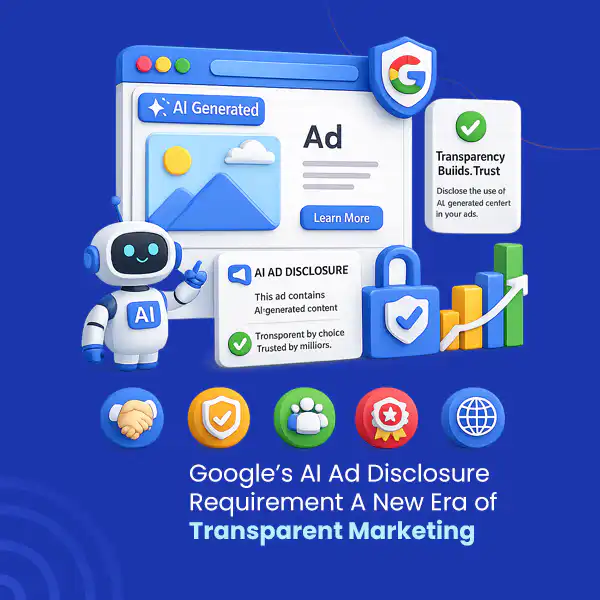
The use of artificial intelligence has been game-changing for the field of digital marketing, as it has been enabling advertisers to create engaging ads much quicker.
But as AI-created content becomes more and more widespread, transparency has emerged as a top concern. The new policy of Google that mandates the disclosure of AI-created ads is a huge leap towards gaining trust of the consumer.
It is important for business owners and digital marketers to be aware of these developments.
What is Google's AI Ad Disclosure Requirement?
Google’s Ad AI Disclosures Policy presents more detailed guidelines about advertisers that use AI-generated visuals in their ads. The goal here is obvious to help people understand which ads include authentic materials and which are based on artificial intelligence.
Rather than limiting AI innovation, Google aims to encourage responsible AI adoption by ensuring that users receive greater transparency about the content they consume.
This move reflects the growing industry-wide focus on ethical AI usage across digital platforms.
Why is it necessary to disclose advertisements generated by AI?
Contemporary consumers encounter several thousand advertisements each day. With AI-generated ads becoming more and more realistic, the line between reality and fiction is getting blurred.
Here are the benefits of AI-generated ad disclosure:
- Builds consumer trust through transparency.
- Reduces misinformation caused by manipulated visuals.
- Encourages responsible AI adoption.
- Improves credibility for brands using AI ethically.
- Supports a healthier digital advertising ecosystem.
Transparent marketing helps customers to make informed decisions while strengthening long-term brand relationships.
Build Trust Signals Across Your Website
Google’s new AI policy for Google Ads does not prohibit AI-driven advertising. Instead, it stresses the need for transparency regarding AI usage in making and editing the visuals in ads.
Businesses using AI for:
- Product demonstrations
- Promotional videos
- Lifestyle imagery
- Creative ad campaigns
- Brand storytelling
Need to check the latest advertising rules from Google to see whether disclosure is needed. For advertisers, this translates into making sure that compliance is taken care of at the conceptual level.
Implications for Digital Marketing
The future of AI transparency in advertising does not just lie in compliance but in the adoption of a new era of marketing ethics. Firms that disclose their AI practices are more likely to gain customer trust compared to those trying to hide them.
With search engines, social networks, and regulatory agencies continually working on AI governance issues, transparency will soon be a must-have element in every digital marketing campaign.
Brands should begin preparing by:
- Establishing AI content governance policies.
- Reviewing AI-generated creative assets before publishing.
- Maintaining documentation of AI-assisted content creation.
- Training marketing teams on evolving AI advertising regulations.
- Prioritizing authenticity alongside automation.
Best Practices for Using AI-Generated Marketing Content
Artificial intelligence remains an incredibly valuable tool for marketers when used responsibly. To maximize its benefits while remaining compliant:
- Always verify factual accuracy before publishing.
- Keep human oversight throughout content creation.
- Employ AI in improving creativity without undermining strategy formulation.
- Guarantee that visuals created through AI meet specific platform guidelines.
- Keep abreast of Google’s changing advertising policies.
Adoption of responsible AI improves your campaign effectiveness while safeguarding your brand image.
The Role Transparency Will Play in the Future of Advertising
As technology advances, consumers will become more demanding of honesty in their brands. The necessity for disclosure not only shows compliance but accountability. Businesses that adopt an approach to transparency now will be more equipped to deal with policy changes and develop customer trust.
Rather than viewing disclosures as restrictions, marketers should see them as opportunities to strengthen brand credibility and differentiate themselves in an AI-driven marketplace.
Frequently Asked Questions
It is the policy by Google that requires advertisement disclosures on use of artificial intelligence for generating or editing their advertisements.
No. Google allows AI-generated advertising content but requires transparency in specific situations.
It helps users understand when content has been created or significantly modified using artificial intelligence, improving trust.
Businesses, agencies, advertisers, and marketers using AI-based creative materials for Google Ads.
Through reviewing Google’s advertising guidelines and disclosing qualifying AI-created content.
Conclusion
The Google AI Ad Disclosure Requirement marks a new era in digital advertising, which is characterized by innovation alongside openness. As artificial intelligence evolves in marketing, companies that adopt ethical creation of content and disclosure processes will be better able to foster relationships with their customers.
For all those who want to stay updated with changing trends in digital marketing through compliance and optimized online visibility, get in touch with #1 Vinayak InfoSoft. Our company’s experts will assist you to come up with an optimized marketing strategy.